Trip Report: Godwin Ranch Preserve, August 2025

— by Cindy Chrisler

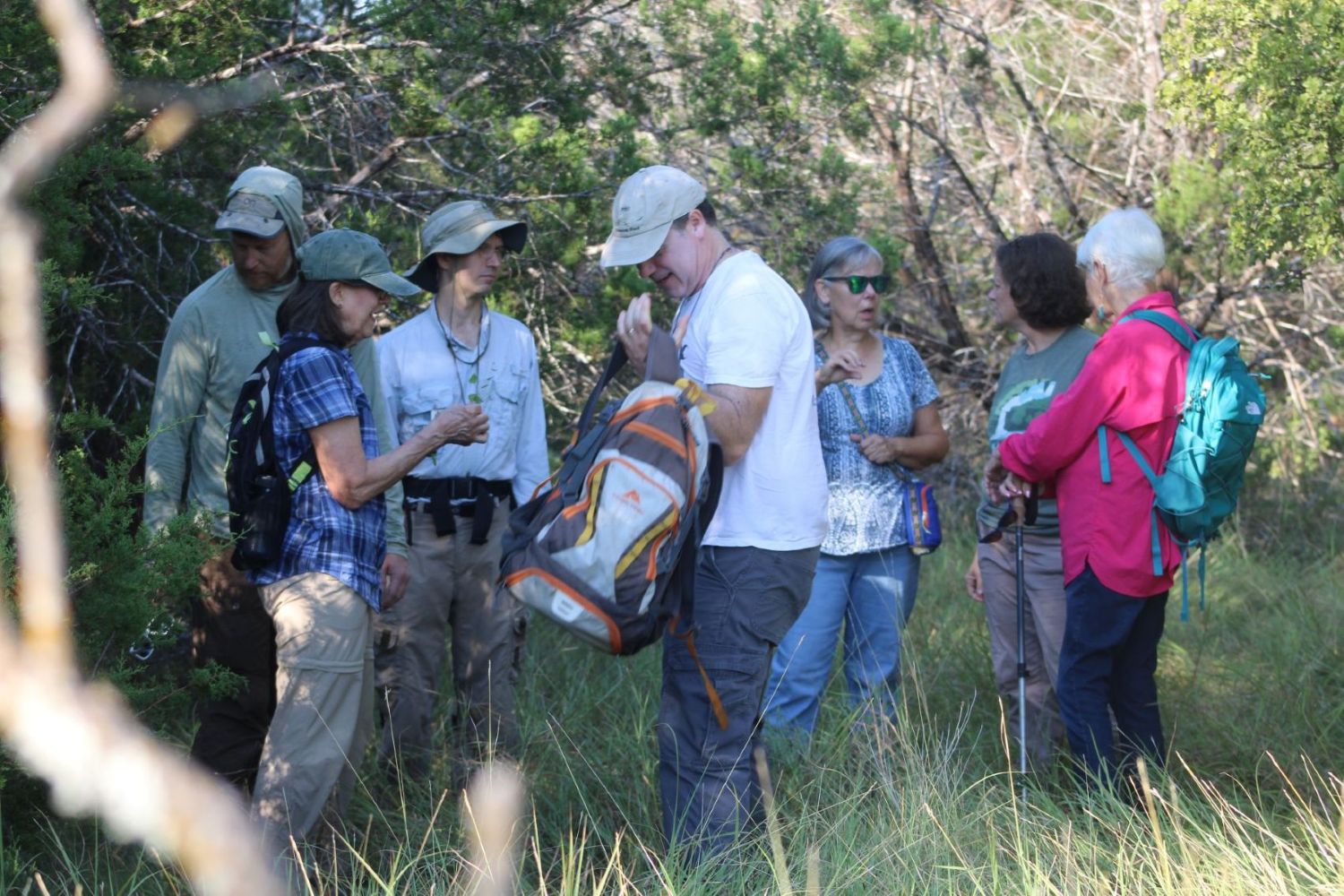
image of a group of people
Godwin Ranch Field Trip, Aug 2025. Photo by Cindy Chrisler.

Eight NPSOT members assembled at 8 a.m. to conduct a plant survey at Godwin Ranch Preserve in Georgetown on Sunday, August 24, 2025. This was the third of four surveys we will conduct to establish a plant list for the preserve.  Nearly two inches of rain in the past week along with even more rain over the past month made for lush grass growth, although few forbs were blooming.  The early start and low humidity made for a pleasant walk through the customary loop used for this survey.  

In the two hours spent on the survey, we observed about 60 species of plants. Most were native species, but we also found invasives such as chinaberry, common hedge parsley, King Ranch Bluestem and Johnson grass. Recent moisture allowed nostoc (witches’ butter) and mosses to thrive on rocks and bare soil along the trail. We identified a number of grasses, including Little Bluestem, Silver Bluestem, Sideoats Gramma, Texas Gramma, and Heller’s Rosette Grass. Pasture Heliotrope was blooming, and we identified seed heads for Firewheel, Upright Prairie Coneflower, Greenthreads, and Beebalm. Doveweed was abundant, and a few Drummond’s rain lilies were spotted. Perhaps the highlight of the survey was finding a Rio Grande Copperlily, an unexpected find. Milkweed vines were prominent, but we so far have been unable to definitively identify the species. Native oaks, Ashe Juniper, Cedar Elm, and Eve’s Necklacepod are interspersed around the preserve, and are decorated with several species of lichens.

Late summer is not the optimal time to observe birds, but we were able to identify the songs of White-eyed Vireos and Lesser Goldfinches and spotted a black-chinned hummingbird. We found tracks for feral hogs and raccoons in the muddy trail, and scat of jackrabbits and coyotes. We also discovered a shed antler from a white-tailed deer and the skull of a feral hog. 

The fourth and final survey will be held in November.
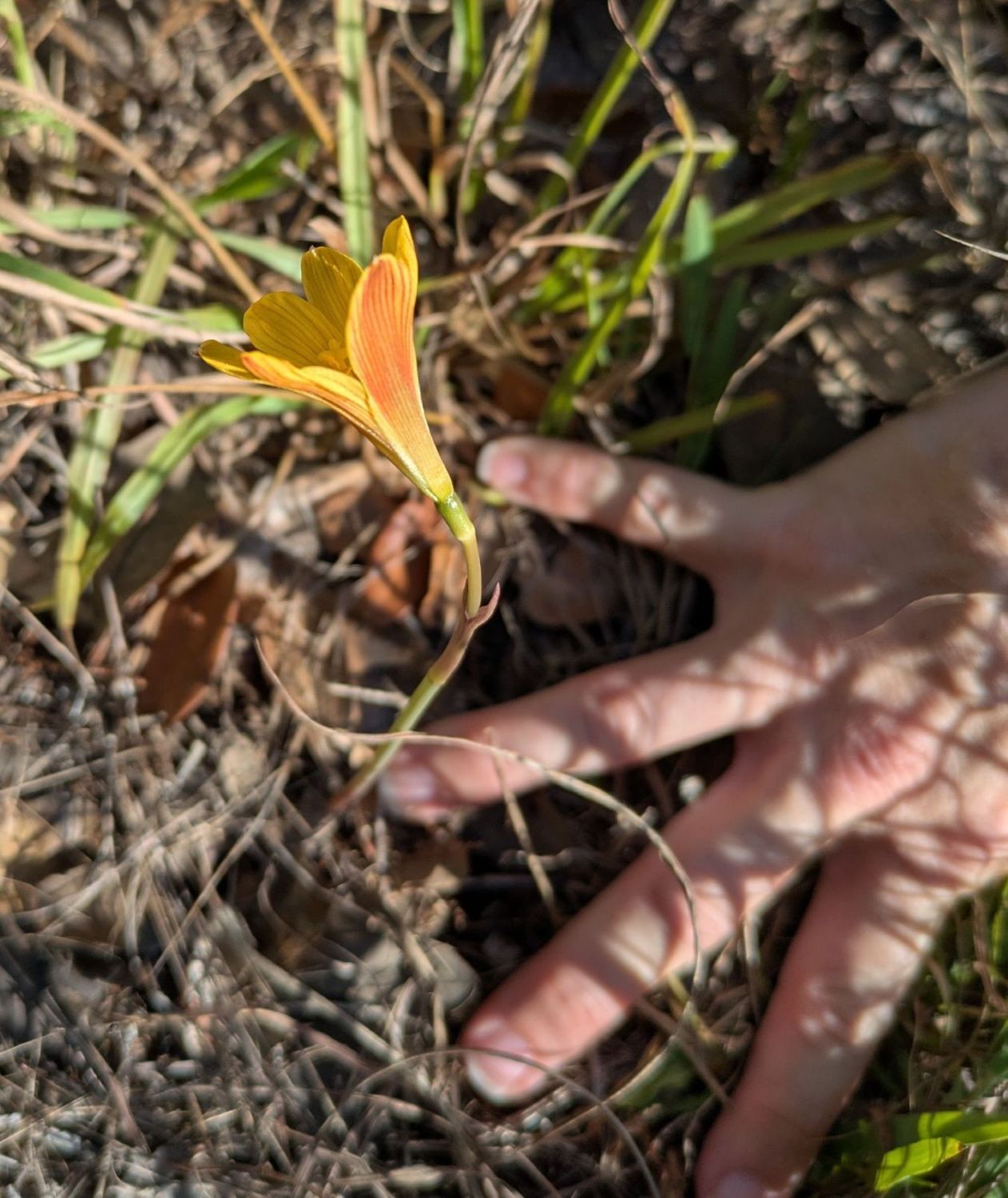
image of Rio Grand Copperlily, Habranthus tubispathus
Rio Grand Copperlily, Habranthus tubispathus. Photo by Cindy Chrisler.

————–
See photos from this trip and others in our album =>
Trip Report: Booty’s Road Park Field Trip

— by Anne Adams

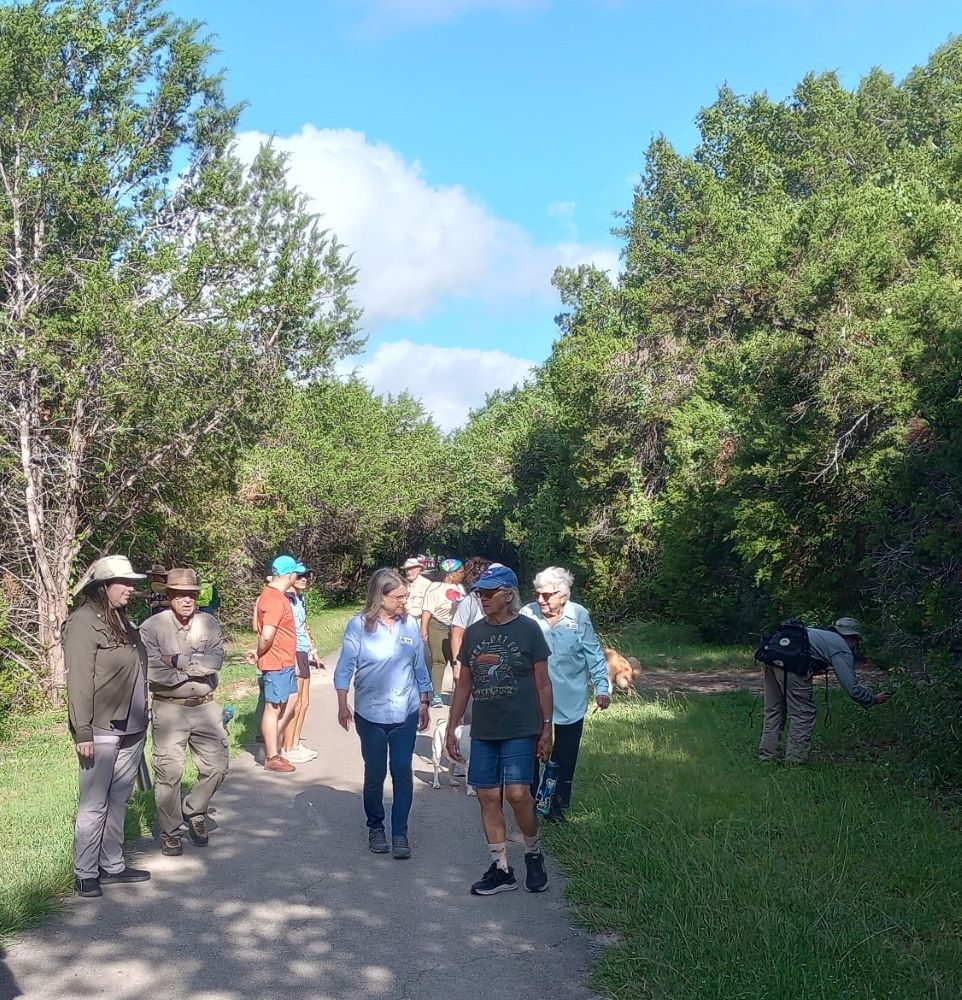
image of group walking
Booty’s Road Park. Photo by Erin Buhl.

On Saturday, June 21, a group of nineteen people and two sociable canines gathered at Booty’s Road Park in Georgetown to hike a one-half mile section of the San Gabriel River Trail. The outing began with a plant scavenger hunt at the edge of the parking lot, where a diverse group of trees, shrubs, and vines could easily be observed at eye level. Participants were challenged to find eighteen species listed on a handout.

From the parking lot, we headed east following the concrete trail that passes through an open woodland of Ashe juniper, Escarpment live oak, and Cedar elm. The path soon transitions to decomposed granite and enters a shaded riparian woodland. Here the path is bordered by a steep limestone bluff on the left, and the North Fork of the San Gabriel River on the right. Along the base of the bluff, large boulders provide varied terrain for an interesting mix of herbaceous plants, including Turk’s cap, Toothleaf goldeneye, Roughstem rosinweed, Pigeonberry, Inland wood oats, and White avens.

Overstory trees, including Pecan, Walnut, American elm, American sycamore, and Green ash, form a high, closed canopy, while understory species include Box elder, Texas ash, Carolina buckthorn, Yaupon holly, and Roughleaf dogwood. Vines, including Mustang grape, Virginia creeper, Carolina snailseed, and Yellow passionvine were frequently seen. Less common were Pitcher’s leatherflower, Alabama supplejack, Anglepod, and a delicate Creeping cucumber.

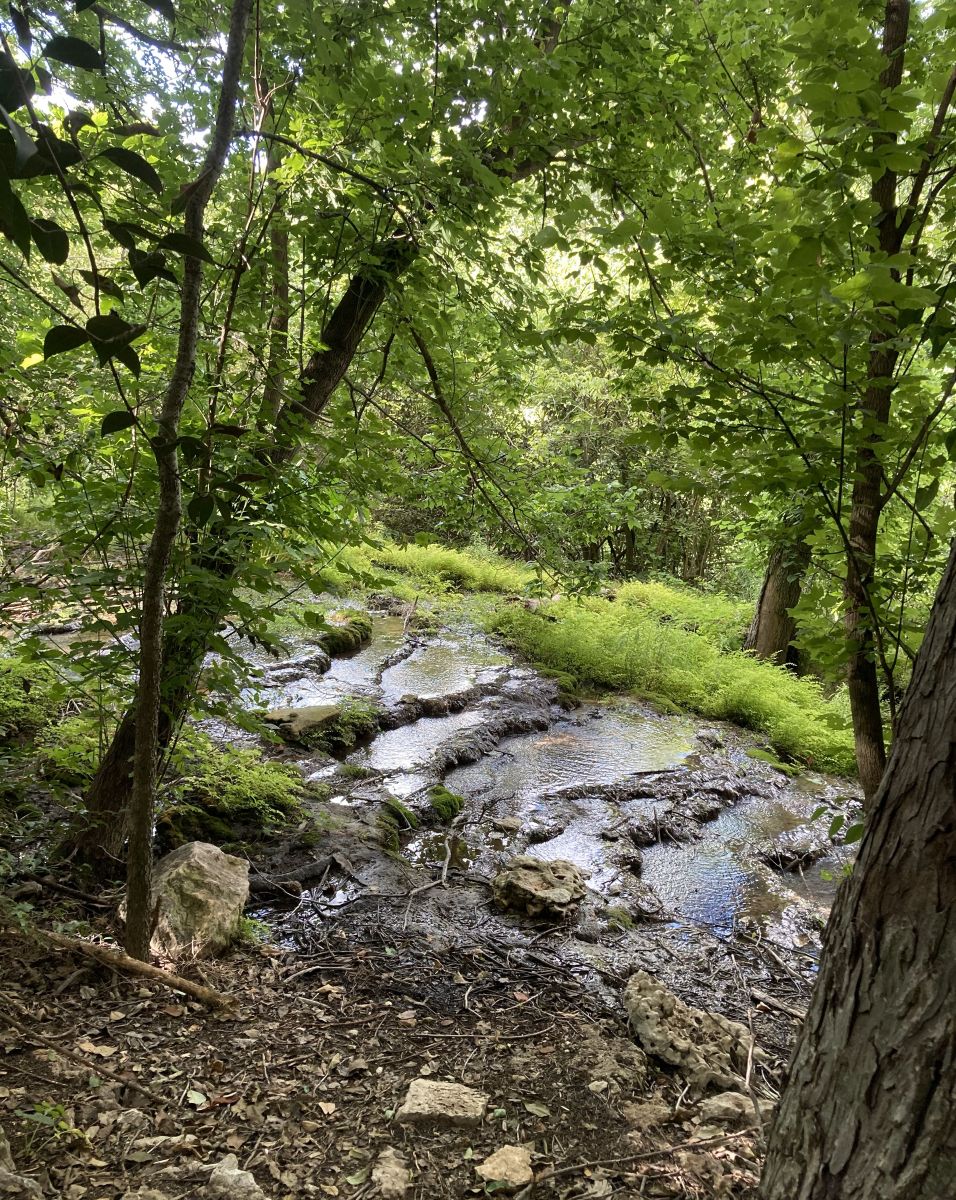
Adding interest to the hike were several small, natural seeps that emerge from the bluff and flow under the trail through culverts, trickling down toward the river. One of the prettiest spots was a small, spring-fed pool lined with maidenhair ferns and moss-covered rocks, fed by a perennial spring higher up on the bluff. At this popular spot, the group took time to enjoy the scenery as the outflow from the pool forms a wide, shallow sheet that cascades down a rocky slope dotted with mosses, ferns, and lush aquatic vegetation. Near this spot, observant participants noticed the pink flowers of Marsh fleabane, as well as white-flowered American water willow, in moist soils along the river bank. A little past the pool, where the trail splits around some major boulders, the group observed several Rusty blackhaw, a small tree distinct for its shiny opposite leaves and dark checkered bark. A little farther on, the group turned around and we retraced our steps back to the parking lot.

While some of the participants had hiked this trail before, it was a new experience for others. On this day, the easily accessible trail was populated with hikers, cyclists, dog walkers, and families with strollers. Our group found that, even on a warm June day, this woodland trail provided a welcome respite from the rising heat.

Photo credits: left, Nancy Pumphrey; right, Anne Adams

————–
See photos from this trip and others in our album =>
Trip Report: Godwin Ranch Preserve

— by Cindy Chrisler

image of blooming flower
Godwin Ranch, May 2025. Photo by Cindy Chrisler.

Fifteen NPSOT members and Good Water Master Naturalists conducted the second plant survey at Godwin Ranch Preserve on Saturday, May 24. The preserve, created as a mitigation for Lakeline Mall in Cedar Park, is tucked away on Williams Drive near DB Wood Road in Georgetown.  It is managed by Eléonore Le Corvaisier, a director of the Texas Cave Management Association.

Fresh faces aided plant identification of the early summer wildflowers in abundance at the preserve.  Over 70 species of plants were observed during the two hours spent leisurely walking the loop and exploring open meadows along the path.  We marveled at the size of Antelope Horns Milkweed pods on several plants deep in the preserve. Notable finds included Meadow Pinks, Firewheel, Pasture Heliotrope, and Prairie Brazoria. 

Other sites of interest along the loop included a kiosk and benches built by local Boy Scout troops, a water guzzler for the wildlife, and karst cave entrances.  The preserve has been explored by the local cave group as well as Nature Trackers. 

The next survey is scheduled for August 24.

image of path in woods
Godwin Ranch, May 2025. Photo by Greg Donica.

————–
See photos from this trip and others in our album =>