Trip Report: On the Milkweed Trail, Berry Springs October 2025

— by Cindy Chrisler

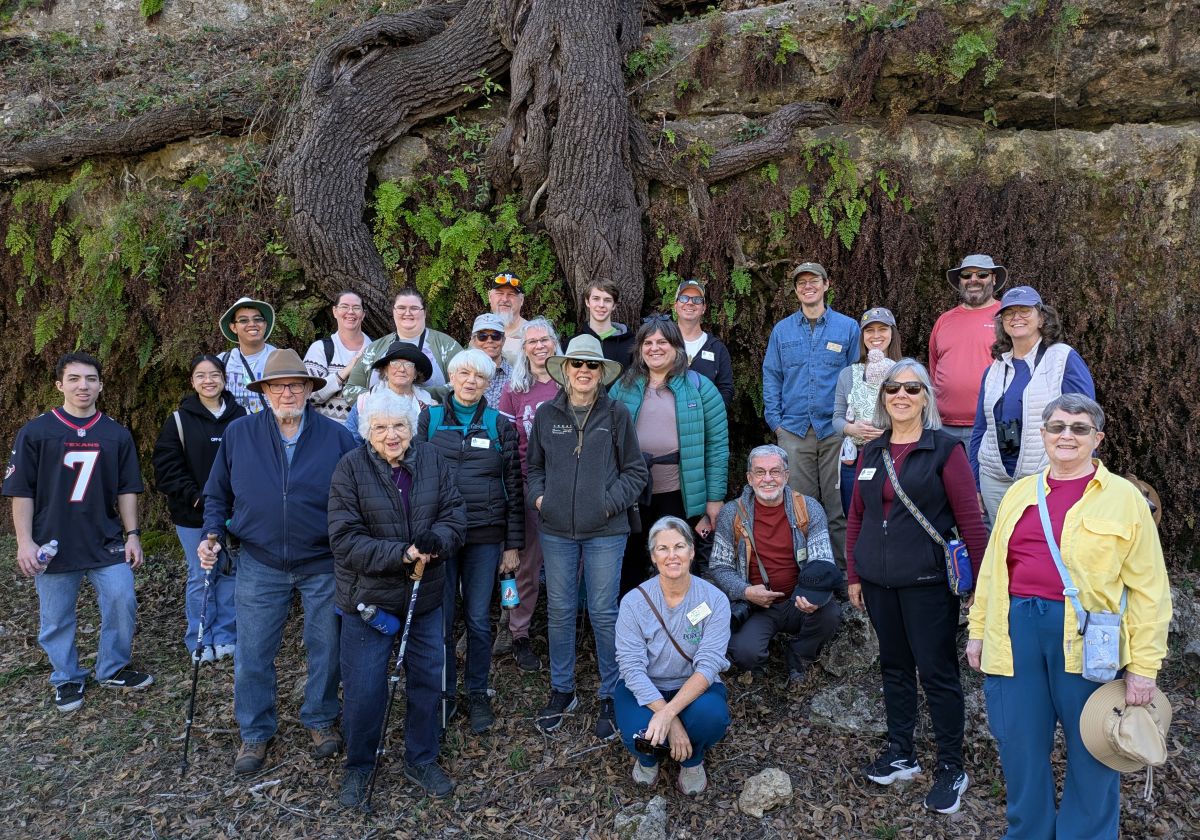
Hikers on trail
On the trail at Berry Springs Park & Preserve, Oct 2025. Photo by Cindy Chrisler.

Eleven NPSOT-Wilco members and a guest congregated on October 26, 2025 at Berry Springs Park & Preserve, just north of Georgetown, to explore the newly opened Milkweed Trail. This trail is a three quarters of a mile loop along the outline of a 30 acre meadow and adjoining riparian habitat on the southeast side of CR 152, the road that leads to the entrance of the park. Just opened in August, the trail is accessed by taking a paved trail from the donkey compound down to the treeline by Berry Creek. The paved trail now extends under the bridge where CR 152 crosses Berry Creek, and leads to the mulched/mowed meadow trail. 

Thanks to a lucky cool front, the afternoon hike was pleasant as most of the trail was shaded. On the way to the creek/bridge undercross we encountered woody species such as Box Elder, Black Willow, mature (cultivated) and young (naturally germinated) Pecan trees, Bur and Live Oaks, Bois d’Arc, and the ever present and persistent Poison Ivy. Most shrubs and herbs were long past the flowering stage but could still be identified, including Rosinweed, Bear’s Foot, Southern Dewberry, Williamson County Winecup, and White Heath Aster. 

Once on the actual trail, we visited the site where the NPSOT-Wilco Chapter planted saplings in 2018. The saplings, planted near CR 152 and across the wooded area to prevent unauthorized hiking, consisted of Texas Ash, Beautyberry, Trifoliate Sumac, Cottonwood, Mexican Plum, and Elderberry. They were protected with mesh fences and provided with deep watering via PVC pipes for several years. Further on the trail were large stands of Frostweed just past bloom, and a stand of Turk’s Cap.

The trail meanders through the tip of the park’s historic pecan grove edged with Western Soapberry, then follows the perimeter of a large meadow. The meadow was once home to Chinaberry and Honey Mesquite, which were eliminated in the early 2020s by the efforts of chapter member Charles Newsom. Now the meadow features Silver Bluestem, Liatris, several species of milkweed, Eryngo, and other wildflowers.

The scrub brush between the meadow and Berry Creek and Dry Berry Creek is composed of Possumhaw, Cedar Elms, Elbowbush, Mexican Buckeye, and other shrubs. This area is home to flying squirrels, swamp rabbits, and the occasional river otter family and beavers, as documented by Good Water Master Naturalists with trail cams. The portion of the trail alongside Dry Berry Creek was recently seeded with Antelope-horn Milkweed courtesy of the Monarch Sanctuary Project.

The group ended the hike by visiting the pollinator gardens at the park entrance and the turnaround near the campground entrance. Both sites have numerous species of nectar plants for bees and butterflies. 

The Milkweed Trail is open to the public during normal park hours and may be enjoyed year round. 

————–
See photos from other trips in our album =>

Trip Report: Grasses at River Ranch County Park, September 2025

— by Anne Adams and Cindy Chrisler

image of group
Ricky Linex shares his expertise! @ River Ranch County Park, September 2025. Photo by Cindy Chrisler.

The field trip on September 12, 2025, to River Ranch County Park near Liberty Hill, was attended by 22 participants and led by Ricky Linex. This field trip was a follow-up to Ricky’s presentation at NPSOT Williamson County’s chapter meeting on September 11, where he presented “Guidelines for Learning to Identify Common Grasses of Central Texas.”

Calling on his decades of service with the NRCS, as well as information presented in his book, Range Plants of North Central Texas: A Land User’s Guide to their Identification, Value and Management, Ricky is a wealth of knowledge. 

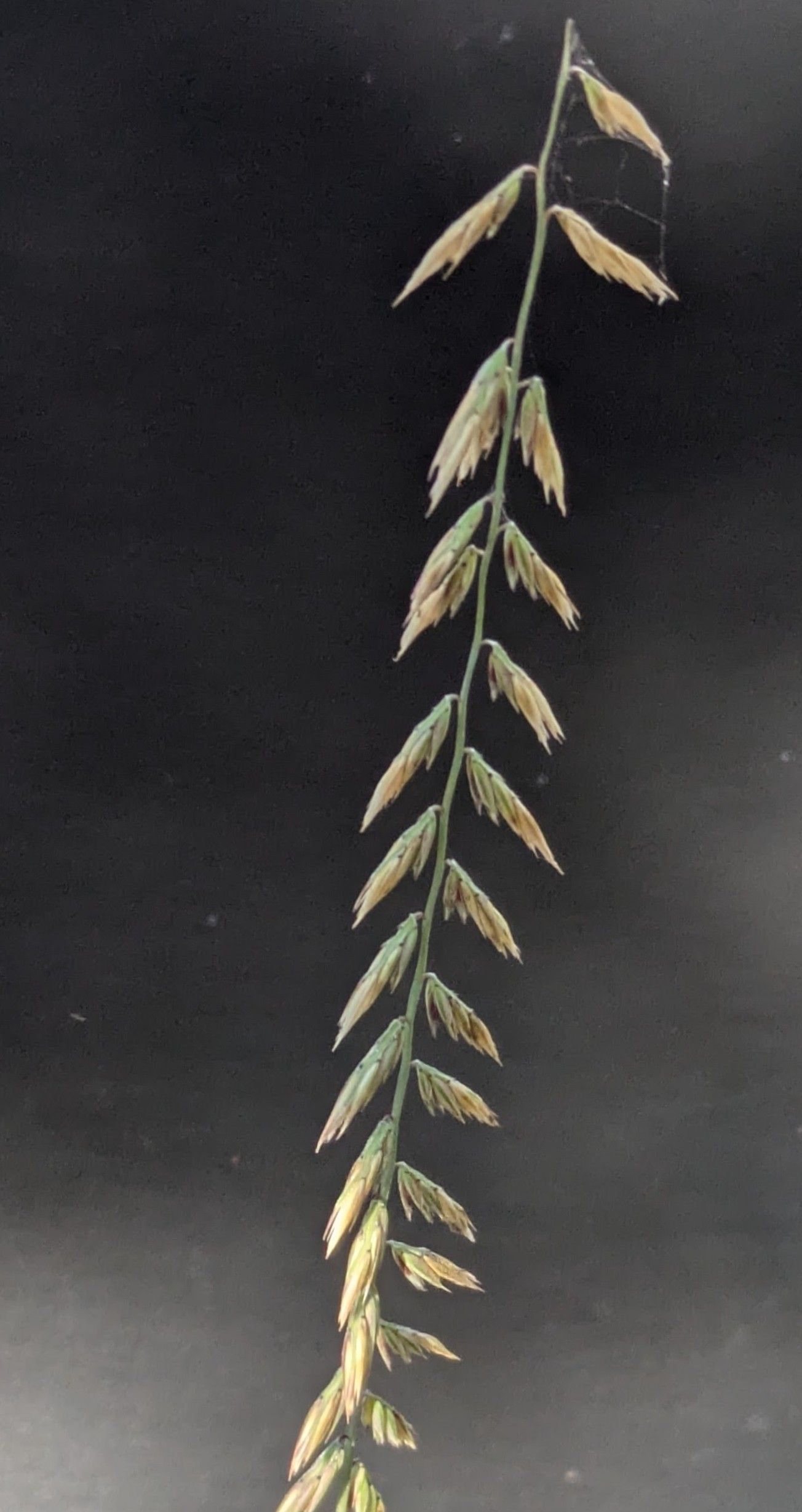
The hike covered about 1 mile through live oak-juniper savannah, where native grasses included tall grama, little bluestem, seep muhly, slim tridens, hairy grama, Texas grama, hairy tridens, and indiangrass, as well as rosettegrass, lovegrass, KR bluestem, and threeawns. Forbs included frogfruit, wooly vervain, pasture heliotrope, slender greenthread, broomweed, skeleton flower, doveweed, Drummond’s rain lilies, bullnettle, and noseburn.

Along the trail, Ricky demonstrated how touching or smelling plants can aid in identification. For example, to tell the difference between buffalograss and curly mesquite in the vegetative stage, he showed us how to rub a piece of stolon between the lips. If smooth, it is buffalograss, while stolons of curly mesquite are rough. At various stops, participants smelled crushed leaves of juniper, chewed leaves of prickly ash, or bravely rubbed leaves of noseburn on their skin. On finding bullnettle, Ricky explained how to safely collect its edible seeds. However, he cautioned that touching the leaves can be a very unpleasant experience.

At one point we stopped to study a motte of woody plants that included live oak, ashe juniper, hackberry, elbowbush, agarita, and white honeysuckle. From a wildlife perspective, Ricky explained that this dense vegetation would provide excellent cover for doves, quail, and other birds. For a land manager, such a motte could be duplicated in other areas by simply taking a shovelful of soil from under the canopy, which contains a diverse seed bank, and distributing it to other places on the property.

After the leisurely hike along the trails, the participants returned to the starting point and continued conversations with Ricky until the end of the allotted time. The field trip ended before the temperature became too uncomfortable.

River Ranch County Park includes 20 miles of hiking trails within its 1,354 acres. The trail chosen for this hike is one of the furthest from the park entrance, and less used than other trails, but was perfect for observing late summer grasses, which were still green thanks to recent rains. Although this hike covered a tiny portion of the park, the hike was a good introduction for those who had not previously visited River Ranch.

image of Seep muhly
Seep muhly, Muhlenbergia reverchonii @ River Ranch County Park, September 2025

————–
See photos from this trip and others in our album =>

Trip Report: Godwin Ranch Preserve, August 2025

— by Cindy Chrisler

image of a group of people
Godwin Ranch Field Trip, Aug 2025. Photo by Cindy Chrisler.

Eight NPSOT members assembled at 8 a.m. to conduct a plant survey at Godwin Ranch Preserve in Georgetown on Sunday, August 24, 2025. This was the third of four surveys we will conduct to establish a plant list for the preserve.  Nearly two inches of rain in the past week along with even more rain over the past month made for lush grass growth, although few forbs were blooming.  The early start and low humidity made for a pleasant walk through the customary loop used for this survey.  

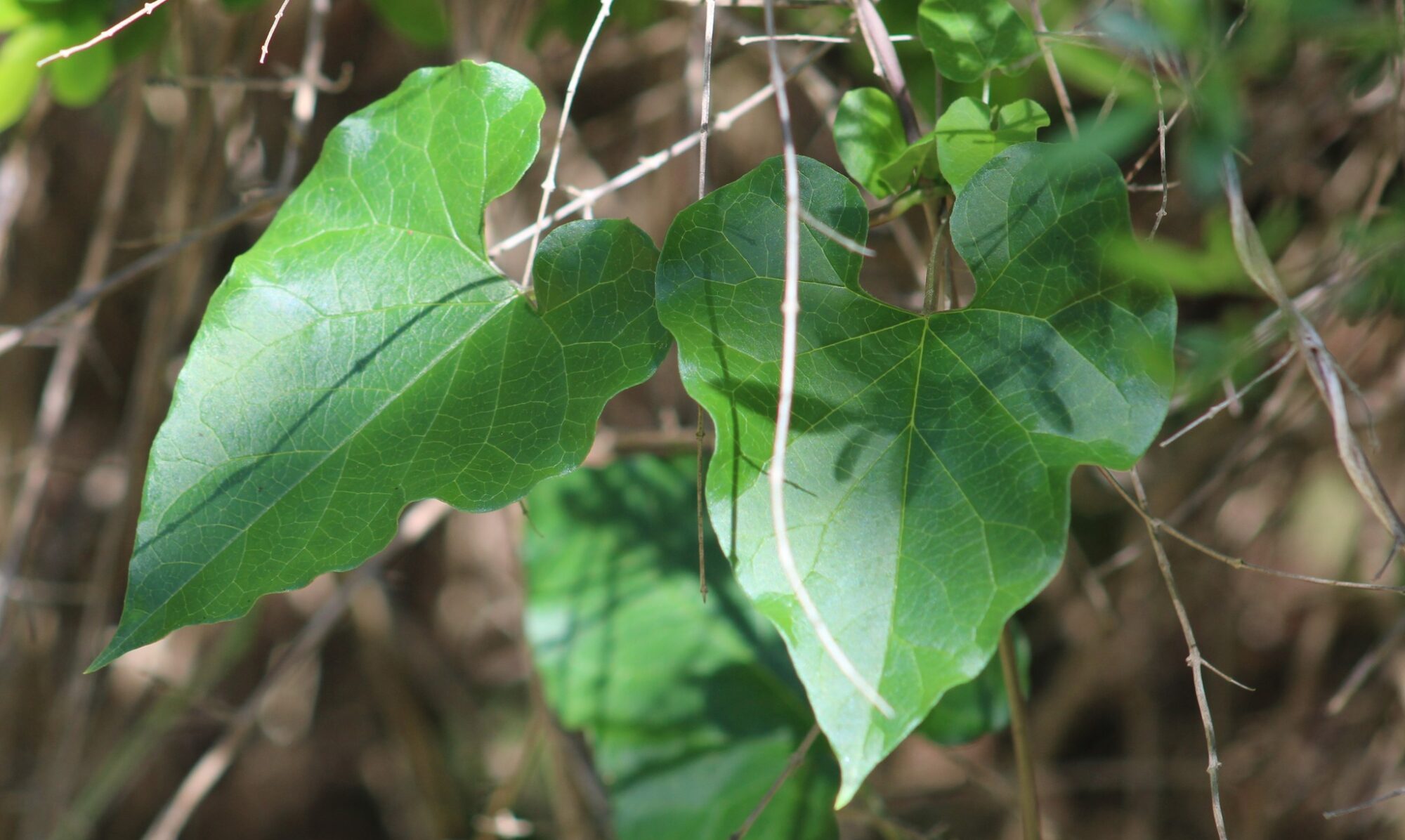
In the two hours spent on the survey, we observed about 60 species of plants. Most were native species, but we also found invasives such as chinaberry, common hedge parsley, King Ranch Bluestem and Johnson grass. Recent moisture allowed nostoc (witches’ butter) and mosses to thrive on rocks and bare soil along the trail. We identified a number of grasses, including Little Bluestem, Silver Bluestem, Sideoats Gramma, Texas Gramma, and Heller’s Rosette Grass. Pasture Heliotrope was blooming, and we identified seed heads for Firewheel, Upright Prairie Coneflower, Greenthreads, and Beebalm. Doveweed was abundant, and a few Drummond’s rain lilies were spotted. Perhaps the highlight of the survey was finding a Rio Grande Copperlily, an unexpected find. Milkweed vines were prominent, but we so far have been unable to definitively identify the species. Native oaks, Ashe Juniper, Cedar Elm, and Eve’s Necklacepod are interspersed around the preserve, and are decorated with several species of lichens.

Late summer is not the optimal time to observe birds, but we were able to identify the songs of White-eyed Vireos and Lesser Goldfinches and spotted a black-chinned hummingbird. We found tracks for feral hogs and raccoons in the muddy trail, and scat of jackrabbits and coyotes. We also discovered a shed antler from a white-tailed deer and the skull of a feral hog. 

The fourth and final survey will be held in November.

image of Rio Grand Copperlily, Habranthus tubispathus
Rio Grand Copperlily, Habranthus tubispathus. Photo by Cindy Chrisler.

————–
See photos from this trip and others in our album =>