** ARCHIVED POST – LINKS AND IMAGES MAY NOT WORK**
— by Randy Pensabene
In February 2019, the Williamson County Chapter – NPSOT received a request from the Georgetown NEST Empowerment Center to design and install a Butterfly Garden. It would be located at their facility at 2201 Old Airport Road, Georgetown, Texas and needed to be completed for their open house celebration on May 16, 2019. The NEST (Nurturing, Empowering, Supporting for Tomorrow) is operated by The Georgetown Project, a local nonprofit providing services that support their mission: “A community where no child is hungry, hurt, alone, or rejected, and where all children and youth believe they are loved, respected and treated with dignity”. The NEST Empowerment Center is a safe haven after the bell rings offering basic needs, counseling, academic and enrichment support for GISD high school students who are homeless, at-risk or living in transition. Gary Bowers and Randy Pensabene met with NEST personnel, Dennis Dalton, Case Manager, and Bebe Johnson, NEST Empowerment Center Coordinator, to better understand their vision and our role. The NEST’s objectives were to:
- attract butterflies to collect and raise caterpillars as an enriching, science-based activity for the youth;
- support other pollinators and hummingbirds;
- provide a relaxing nature area for the staff and kids to enjoy; and
- have a beautiful garden by the main entrance to the NEST building.
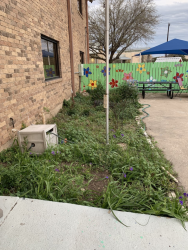
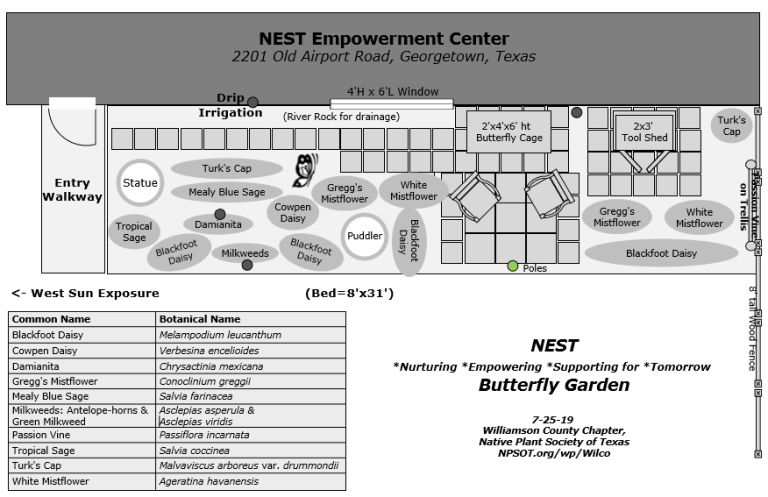
We soon came to an agreement for an all native plant butterfly garden and determined each organization’s responsibilities for the various project aspects and costs. The specifics of how we would work together were documented, which facilitated a stress-free working relationship throughout the project. Next, Randy Pensabene and Pat Perkison met with Barbara Wright, Wright’s Nursery, to consult on native host and nectar plants for butterflies. Pat researched and drafted a preliminary list of native butterfly plants and whether they were a butterfly larval host plant or a nectar source and in which season of the year they provided this service. This list was utilized in choosing the final plants.
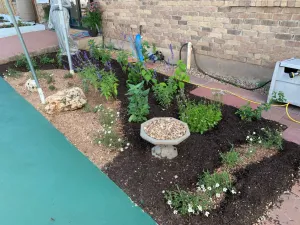
At this point, Beth Erwin, a long-time horticulturalist, joined the project, jumped right in and began searching for plants, making changes as needed with consideration for a pleasing garden design. While Beth procured the native plants, Gary and Randy built a screened butterfly enclosure. We found a small birdbath that was perfect to use as the “butterfly puddler” (i.e. water source). Additionally, NEST got the kids involved to clear the bed, set the pavers, assemble the tool shed and install the trellis.
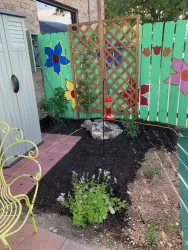
On planting day, the plants were arranged in the bed space and it didnt take long to get them all in the ground. They received a good watering-in and later were mulched and plant labels added so that everyone could identify the native plants. Beth also installed a drip-irrigation system to ensure the plants survived.
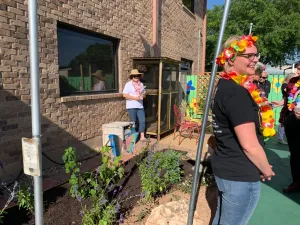
Hooray! We met the deadline, attended a wonderful dedication party for the new NEST building and celebrated with our new friends. Beth continues to check on the plants, adjust the irrigation and fight the good fight against the weeds while our plants get established and flourish. We want to thank all our wonderful volunteers and the Williamson County Chapter – NPSOT wants to thank the NEST for including us in this very worthwhile project and for the important work they do in youth development in Georgetown, Texas! We encourage our members to go by and visit the NEST Butterfly Garden.
** ARCHIVED POST – LINKS AND IMAGES MAY NOT WORK**