Field Trip: Godwin Ranch Preserve Plant Survey, Sunday, November 16, 2025

— by Cindy Chrisler

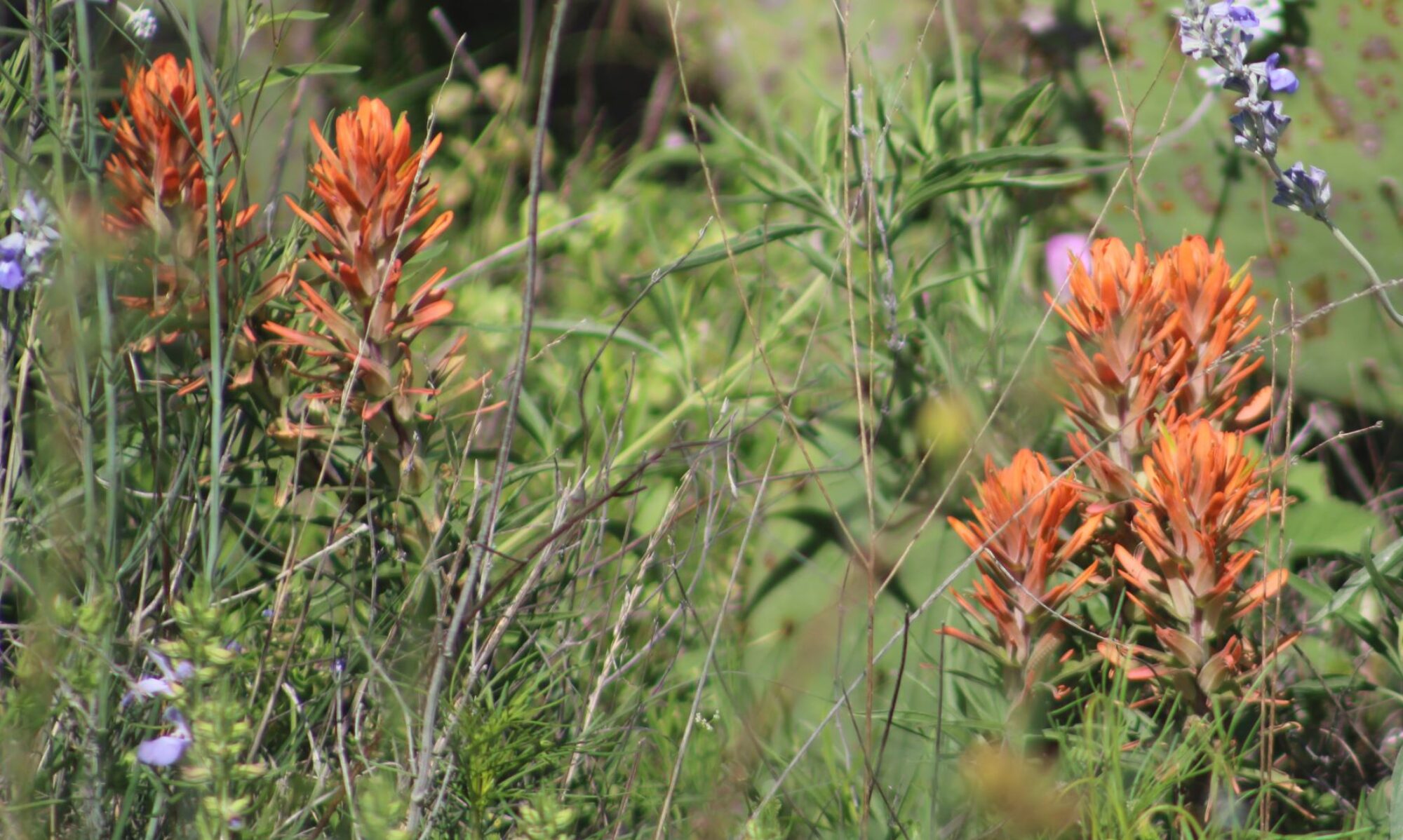
image of wildflower
Godwin Ranch Preserve, March 2025. Photo by Cindy Chrisler.
  • What:    Plant survey and tour of the Godwin Ranch Preserve
  • When:  2:00 PM to 4:00 PM on Sunday, November 16, 2025
  • Where:  Near the corner of DB Wood Road and Williams Drive in Georgetown. 
  • Members and non-members are welcome! No RSVP is required.

Join NPSOT members on the last of four scheduled plant surveys at the Godwin Ranch Preserve in Georgetown. We will begin at 2 p.m. at the gate to the preserve. Godwin Preserve is not open to the public, although several groups utilize it for bird walks, volunteer projects, and cave exploration.

All levels of plant identification expertise are welcome. Even if you don’t know plants, each participant is an observer and may notice and draw attention to something others do not.

Park at the Starbucks strip mall parking lot and walk east along Williams Drive to the gated entrance (a quarter mile or less).  There will be a NPSOT sign at the gate.  If walking that distance is a problem, you may be dropped off at the gate but there is no parking along Williams Drive or in the preserve. 

There are no restrooms or water, so please plan accordingly. Bring your own water and snacks.  Wear clothing suitable for the weather, including long pants and closed toed shoes. We suggest you use bug spray and sunscreen, and wear a hat.

We will walk around a mostly flat mowed path for about a mile and a half. There are some rocks and stumps that may pose a trip hazard, and walking sticks are recommended. In addition to plants, we should see several species of insects and birds.

You may put observations on iNaturalist but please obscure any rare plants. All surveys will be combined into a single plant list for the preserve and shared with the preserve manager.

If you have questions, please contact the Field Trip Committee (contact form here).
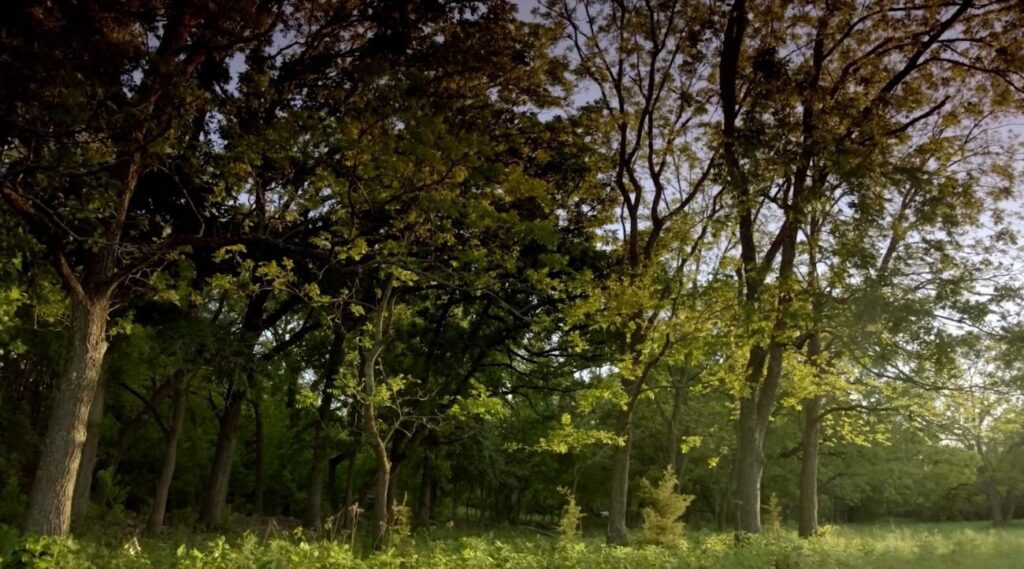
image of path in woods
Godwin Ranch Preserve, May 2025. Photo by Greg Donica.

————–
See photos from some of our previous field trips in our Field Trip Album.

Field Trip: Berry Springs Park and Preserve, Sunday, October 26, 2025

— Cindy Chrisler

Renovations and improvements are near completion at Berry Springs Park and Preserve in Georgetown. Improvements include the new Milkweed Trail that takes visitors to the newly opened South Acres, across the county road from the main entrance. We will take a leisurely walk from the Donkey Viewing Area to the Milkweed Trail entrance, under the bridge where CR 152 crosses Berry Creek. The Milkweed Trail is about a mile of mowed grass or mulched pathways that encircle a 30 acre meadow and meander through the tip of an historic  pecan grove. We will encounter some riparian habitat along Berry Creek and  Dry Berry Creek, where flying squirrels and swamp rabbits have been documented. Bring your camera to capture late summer flowers, bees, butterflies, and birds. Visitors are allowed to harvest pecans if you can beat the squirrels to them.

  • What: Easy walk for about 1.5 miles on mulch, mowed grass, and pavement
  • When: Sunday, October 26, 2025, from 1:30 pm to 4:00 pm
  • Where:  Berry Springs Park and Preserve, 1801 CR 152, Georgetown, TX. Meet at the donkey compound.

The field trip is open to all, members and non-members, and no RSVP is required. Wear clothing appropriate for the weather and bring water and snacks. We recommend using bug spray and sunscreen.

Directions from the south via I-35:  From I-35, take exit 265 and stay on the service road for about 0.7 miles. Turn right at the stop sign for TX 130 and remain on its service road for about 0.8 miles. Turn left on CR 152 and proceed for about a mile to the park entrance. Turn left into the park and proceed about a quarter mile to the first parking lot. Park in front of the Visitor’s Center or the donkey compound. Meet at the donkey compound.

There is no entry fee. Take a few minutes before or after the field trip to visit the new Visitor’s Center and pet the donkeys!

There are restrooms and water stations at the Visitor’s Center, at the top parking lot, and in the campground. There are small pollinator gardens at the end of the entrance avenue, at the campground entrance, near the large pavilion, and at the observation deck for the springs. 

If you have questions, please contact the Field Trip Committee (contact form here).

————–
See photos from some of our previous field trips in our Field Trip Album.

image of wildflower meadow
Wildflower meadow at Berry Springs Park and Preserve, May 2013. Photo by Bob Kamper.

Trip Report: Grasses at River Ranch County Park, September 2025

— by Anne Adams and Cindy Chrisler

image of group
Ricky Linex shares his expertise! @ River Ranch County Park, September 2025. Photo by Cindy Chrisler.

The field trip on September 12, 2025, to River Ranch County Park near Liberty Hill, was attended by 22 participants and led by Ricky Linex. This field trip was a follow-up to Ricky’s presentation at NPSOT Williamson County’s chapter meeting on September 11, where he presented “Guidelines for Learning to Identify Common Grasses of Central Texas.”

Calling on his decades of service with the NRCS, as well as information presented in his book, Range Plants of North Central Texas: A Land User’s Guide to their Identification, Value and Management, Ricky is a wealth of knowledge. 

The hike covered about 1 mile through live oak-juniper savannah, where native grasses included tall grama, little bluestem, seep muhly, slim tridens, hairy grama, Texas grama, hairy tridens, and indiangrass, as well as rosettegrass, lovegrass, KR bluestem, and threeawns. Forbs included frogfruit, wooly vervain, pasture heliotrope, slender greenthread, broomweed, skeleton flower, doveweed, Drummond’s rain lilies, bullnettle, and noseburn.

Along the trail, Ricky demonstrated how touching or smelling plants can aid in identification. For example, to tell the difference between buffalograss and curly mesquite in the vegetative stage, he showed us how to rub a piece of stolon between the lips. If smooth, it is buffalograss, while stolons of curly mesquite are rough. At various stops, participants smelled crushed leaves of juniper, chewed leaves of prickly ash, or bravely rubbed leaves of noseburn on their skin. On finding bullnettle, Ricky explained how to safely collect its edible seeds. However, he cautioned that touching the leaves can be a very unpleasant experience.

At one point we stopped to study a motte of woody plants that included live oak, ashe juniper, hackberry, elbowbush, agarita, and white honeysuckle. From a wildlife perspective, Ricky explained that this dense vegetation would provide excellent cover for doves, quail, and other birds. For a land manager, such a motte could be duplicated in other areas by simply taking a shovelful of soil from under the canopy, which contains a diverse seed bank, and distributing it to other places on the property.

After the leisurely hike along the trails, the participants returned to the starting point and continued conversations with Ricky until the end of the allotted time. The field trip ended before the temperature became too uncomfortable.

River Ranch County Park includes 20 miles of hiking trails within its 1,354 acres. The trail chosen for this hike is one of the furthest from the park entrance, and less used than other trails, but was perfect for observing late summer grasses, which were still green thanks to recent rains. Although this hike covered a tiny portion of the park, the hike was a good introduction for those who had not previously visited River Ranch.

image of Seep muhly
Seep muhly, Muhlenbergia reverchonii @ River Ranch County Park, September 2025

————–
See photos from this trip and others in our album =>