Trip Report: Godwin Ranch Preserve, November 2025

image of Sideoats Grama, Bouteloua curtipendula
Sideoats Grama, Bouteloua curtipendula. Godwin Ranch Preserve, November 2025. Photo by Cindy Chrisler.

Three NPSOT-Wilco members conducted the fourth and final plant survey at the Godwin Ranch Preserve in Georgetown on Sunday afternoon, November 16. The survey was scheduled for the afternoon in anticipation of cooler weather by mid-November, but a heat wave kept temperatures in the mid 80s. Dry conditions over the past month led to a reduction of flowering plants, but nearly 60 species were observed either as green plants or as seed heads on dry vegetation.

Crowpoison was the flower of the day, followed by Texas Snakeweed. Grasses were abundant, but the meadows are largely KR Bluestem. Other grasses observed were Sideoats Grama, Little Bluestem, Silver Bluestem, Heller’s Rosette Grass, Purple Threeawn, and Plains Lovegrass. Some trees and shrubs looked water stressed, especially the Eve’s Necklacepods and Cedar Elms. Oaks and Texas Persimmons seem to be faring better during the dry spell. Several Texas Lantana bushes were poised to bloom in the next few days. Leaves of multiple stands of Drummond’s Rain Lily were noted, and rain later this week should trigger a massive bloom.

This survey concludes the study for the Godwin Preserve. Observations from the four surveys conducted across the last twelve months will be compiled and presented to the Godwin Ranch Preserve Manager, Eléonore le Corvaisier. The NPSOT surveys and observations in iNaturalist will provide a baseline for species at the preserve for future reference.

Cindy Chrisler
Field Trip Committee

————–
See photos from this trip and others in our album =>

Field Trip: Jim Rodgers Trail Walk, Sunday, Nov 30, 2025

— by Vicky Husband

Sign for hiking trail
Trailhead in Southwest Williamson County Regional Park. Photo by Greg Donica.

Join us for our annual Sunday after Thanksgiving field trip!  We have chosen an easy hike on a 1.84 mile mulched trail loop named after Jim Rodgers, Williamson County’s first parks director. Along the trail we will use multiple interpretive signs for native plants sponsored by our chapter. 

Meet at the trailhead parking lot at 1:30pm, on your left just past the first traffic circle.  We will head out by 1:45pm.  Rain or shine!

Restrooms are provided in multiple locations throughout the park.  Bring water, bug spray if desired, and dress for the weather. 

Open to all, including non-members, visitors, and all ages. Well-behaved pets are also welcome!


About Jim Rodgers, from a Williamson County Parks Department 15th anniversary news article, March 2018:

Williamson County’s first parks director, Jim Rodgers, wanted to “distinguish the (newly created) Williamson County Parks Department by focusing on larger, regional parks that provided children with an opportunity to be out in nature, even if they were just a few blocks or miles from their home. Rodgers’ vision was for county parks to model state parks with large open spaces and natural settings. City parks already provided structured recreational parks and sports fields. The desire was to complement and not overlap.”

Questions about the trip? Please contact the Field Trip Committee (contact form here).
Trip Report: On the Milkweed Trail, Berry Springs October 2025

— by Cindy Chrisler

Hikers on trail
On the trail at Berry Springs Park & Preserve, Oct 2025. Photo by Cindy Chrisler.

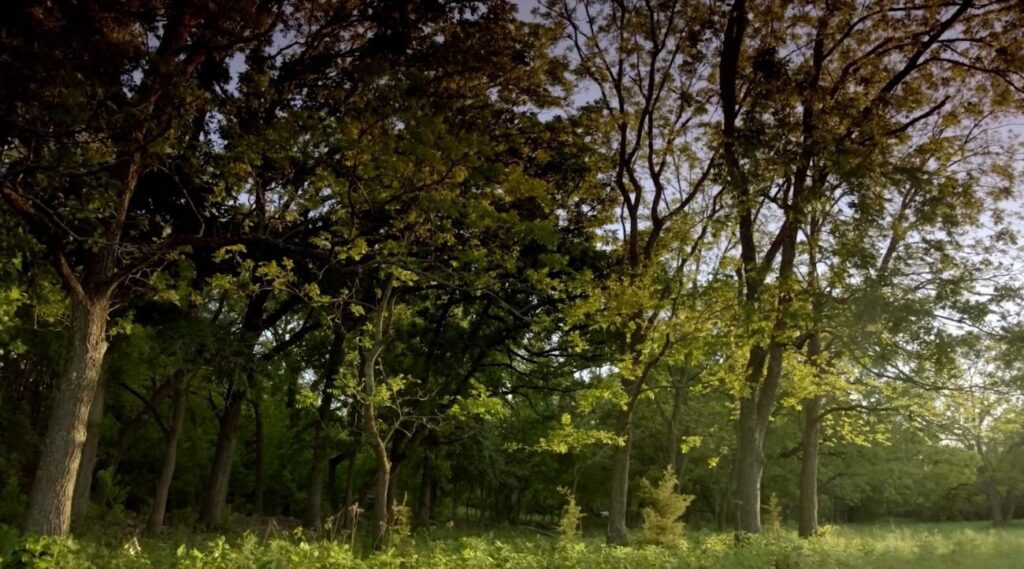
Eleven NPSOT-Wilco members and a guest congregated on October 26, 2025 at Berry Springs Park & Preserve, just north of Georgetown, to explore the newly opened Milkweed Trail. This trail is a three quarters of a mile loop along the outline of a 30 acre meadow and adjoining riparian habitat on the southeast side of CR 152, the road that leads to the entrance of the park. Just opened in August, the trail is accessed by taking a paved trail from the donkey compound down to the treeline by Berry Creek. The paved trail now extends under the bridge where CR 152 crosses Berry Creek, and leads to the mulched/mowed meadow trail. 

Thanks to a lucky cool front, the afternoon hike was pleasant as most of the trail was shaded. On the way to the creek/bridge undercross we encountered woody species such as Box Elder, Black Willow, mature (cultivated) and young (naturally germinated) Pecan trees, Bur and Live Oaks, Bois d’Arc, and the ever present and persistent Poison Ivy. Most shrubs and herbs were long past the flowering stage but could still be identified, including Rosinweed, Bear’s Foot, Southern Dewberry, Williamson County Winecup, and White Heath Aster. 

Once on the actual trail, we visited the site where the NPSOT-Wilco Chapter planted saplings in 2018. The saplings, planted near CR 152 and across the wooded area to prevent unauthorized hiking, consisted of Texas Ash, Beautyberry, Trifoliate Sumac, Cottonwood, Mexican Plum, and Elderberry. They were protected with mesh fences and provided with deep watering via PVC pipes for several years. Further on the trail were large stands of Frostweed just past bloom, and a stand of Turk’s Cap.

The trail meanders through the tip of the park’s historic pecan grove edged with Western Soapberry, then follows the perimeter of a large meadow. The meadow was once home to Chinaberry and Honey Mesquite, which were eliminated in the early 2020s by the efforts of chapter member Charles Newsom. Now the meadow features Silver Bluestem, Liatris, several species of milkweed, Eryngo, and other wildflowers.

The scrub brush between the meadow and Berry Creek and Dry Berry Creek is composed of Possumhaw, Cedar Elms, Elbowbush, Mexican Buckeye, and other shrubs. This area is home to flying squirrels, swamp rabbits, and the occasional river otter family and beavers, as documented by Good Water Master Naturalists with trail cams. The portion of the trail alongside Dry Berry Creek was recently seeded with Antelope-horn Milkweed courtesy of the Monarch Sanctuary Project.

The group ended the hike by visiting the pollinator gardens at the park entrance and the turnaround near the campground entrance. Both sites have numerous species of nectar plants for bees and butterflies. 

The Milkweed Trail is open to the public during normal park hours and may be enjoyed year round. 

————–
See photos from other trips in our album =>