Program Report for March 12: Importance of Honey Bees

** ARCHIVED POST – LINKS AND IMAGES MAY NOT WORK**
— by Nancy Pumphrey

Jodi McCumber from Jackass Honey Farms in Liberty Hill, TX presented so much information on bees and pollinator plants.  When you live in the country the saying goes you wear lots of hats to make a living. Well, Jodi is no exception to that rule.  (Note: Due to the current health crisis, the meeting was sparsely attended with members and newcomers seated with plenty of distance from each other.)

Jodi is a certified beekeeper. In her business, she removes beehives and swarms from unwanted places and specializes in removing Africanized bee swarms.  She makes soap, honey products such as salves, lotions and gift baskets to sell. As if that was not enough, she also runs their Jackass Honey Farms gift shop, gives tours, and home schools her son.

She has 335 hives throughout the area. When she started growing wildflowers for the bees on her farm, she found the monarchs were also frequenting her place and decided to make it a Certified Monarch Habitat. Some of the most important sources of food for the bees are dandelions in early spring, horsemint, mealy blue sage, Gregg’s mistflower and white mistflower. She also grows sage, apple and pear trees, lavender, and rosemary for the bees and other pollinators.  We were able to have a lively discussion regarding natives and non-natives in relation to bee food and the importance of not using invasive plants but finding a native alternative instead.

Jodi and her son announce dates for tours of their farm on her Facebook page or by email. Just go to www.jackasshoneyfarms.com and sign up.

Here are just a few of the interesting facts we learned about bees.

  • Bees, except the queen, live 4-6 weeks.
  • Queens can live over 8 years and lay 700-2500 eggs a DAY. The Queen has other bees who wash them, feed them, etc. because they are so busy laying eggs.
  • Bees don’t fly in the rain or fog.
  • You might see them cling together or to flowers until it is dry enough to return to the hive.
  • Beekeepers move bees to different places to pollinate a crop, such as almonds in California, but only 50-60% of the bees arrive back home due to pesticide and insecticide use in the fields.
  • Bees need water, so put rocks or sponges in a shallow bird bath so they can land on something to get a drink. They also like a little salt or sugar in the water.
  • A bee can fly 5 miles to find food or water.

To learn more about bees Jodi recommends the Netflix documentary “Hive Alive” for a close up of bee behavior.

Jodi brought lots of products for us to taste. She is available to talk at meetings and at schools. Contact her at 512-484-1101.


You can see the March 12, 2020 business presentation slides here.

** ARCHIVED POST – LINKS AND IMAGES MAY NOT WORK**
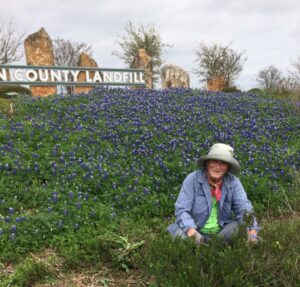
Thank you, Landfill Pollinator Garden Volunteers

** ARCHIVED POST – LINKS AND IMAGES MAY NOT WORK**

Williamson County Pollinator Garden

— by Marilyn Perz
The Pollinator Garden workday was well attended last Saturday by nine volunteers from the Good Water Master Naturalist Chapter, Tonkawa NPSOT Chapter and our Williamson County NPSOT Chapter.  Thank you to all of YOU!

Williamson County Pollinator Garden

The weather was great for working out there and we were not even blown away by the strong Prairie winds that can whip through there at times. A pile of weeds and brush was generated, and we all felt a sense of accomplishment as that pile grew.  As with most gardens, the work is never really done.

Williamson County Pollinator Garden

Even though we do not plan to have another official workday there, you are always welcome to continue with the cleanup on your own.  A bit of a perk will come in 2-3 weeks when the berm will become “Bluebonnet Hill” and maybe while you take your yearly Bluebonnet picture, grab a few weeds too!

** ARCHIVED POST – LINKS AND IMAGES MAY NOT WORK**

Program Summary for Feb 13: Wildlife in Your Garden with Kelly Simon

** ARCHIVED POST – LINKS AND IMAGES MAY NOT WORK**

— by Randy Pensabene

At our February 13, 2020 chapter meeting, Kelly Conrad Simon showed the audience how to use a variety of native plants to create a Texas Wildscape that can meet human needs for a visually appealing landscape while also providing the plants much-needed by wildlife. She demonstrated how by providing the basic elements of habitat (food, shelter and water) in your garden, Texans can attract an exciting variety of birds, butterflies, frogs and lizards and bring the beauty and vitality of nature home.

The most important step in developing a Wildscape is learning about the plants and soils that characterize your region. Since wildlife thrives in the presence of plants they have adapted to, native plants are encouraged in Wildscapes. Introduced plants are not good substitutes for the native plants used by wildlife.

Plants native to your area provide both food and shelter requirements for wildlife. Select plants for their food value as well as plants that will grow to different heights and density. This layering effect will allow wildlife to select areas they find most comfortable.

View Kelly’s presentation at this link.

Learn about native plants through the Native Landscape Certification Program (NLCP)  with classes focused on the local area. Find schedule info here.


You can see the February 13, 2020 business presentation slides here.

** ARCHIVED POST – LINKS AND IMAGES MAY NOT WORK**