Volunteer for… Invasive Plant Removal!

** ARCHIVED POST – LINKS AND IMAGES MAY NOT WORK**

Looking for some outdoor exercise?  Volunteer to join Charles Newsom tackling invasive plant removal.  To contact Charles, complete the form at this link.   NPSOT members and non-members are welcome.

Working as a volunteer, chapter member Charles Newsom leads projects in local parks, preserves and recreation areas that help land managers deal with invasive plants by figuring out what can be done and then leading teams to do it.  If you’ve ever been to Berry Springs Park and Preserve in Georgetown, or Miller Springs Nature Center in Belton, you’ve enjoyed a couple of examples among the public spaces that benefit from Charles’ volunteerism.

Current and upcoming project locations include preserves owned by the Texas Land Conservancy (2.4 acre Berry Creek Preserve and 6 acre preserve along the San Gabriel River), Georgetown’s Garey Park, and Williamson County’s Berry Springs Park & Preserve.

The project at Berry Creek Preserve, owned by the Texas Land Conservancy (TLC), can use volunteers now.   TLC’s Berry Creek Preserve is in Georgetown just off Shell Spur Road.

Mindful of safety concerns for social distancing, Charles says any number of volunteers from 1 to 6 would be safe working at Berry Creek Preserve.  The work site is adjacent to the parking area so it’s a short walk and easy for you to stop at any time.  You will need to complete a TLC release form in advance.

If you need tools, Charles can provide 4 pairs of loppers and 2 hand saws.  You need gloves and closed toe shoes.  Long pants are best.  Tights should be avoided as there are scratchy branches everywhere.  Everyone should bring their own water, and bring a hat since not all work is in the shade.

Charles described the project:

“It is an area of 2.4 acres and is adjacent to Berry Creek. It is forested and rocky in spots.  It is also fairly pristine.  I have already removed about 70% of the invasives and will finish the rest (the largest trees) when it is cooler.

It has a significant number of downed Ashe junipers that make exploring the area difficult as well as creating eyesores.  Volunteers could saw off and/or lopper off the many small limbs on each tree and I could cut up the trunks.  We could make a nice pile of cut pieces and then all of it could then be used for firewood or for woodworking.

The trees are not very large so we don’t have that to deal with.  They are also well-separated so one person per tree at any given time would nicely space out the work.   It is probably less than a dozen trees but it would open up the area quite nicely.

The last step would be in putting in a trail.  The trail-making consists of minor brush clearing (easy) using hand clippers or loppers and removing any trip hazards such as small rocks. “

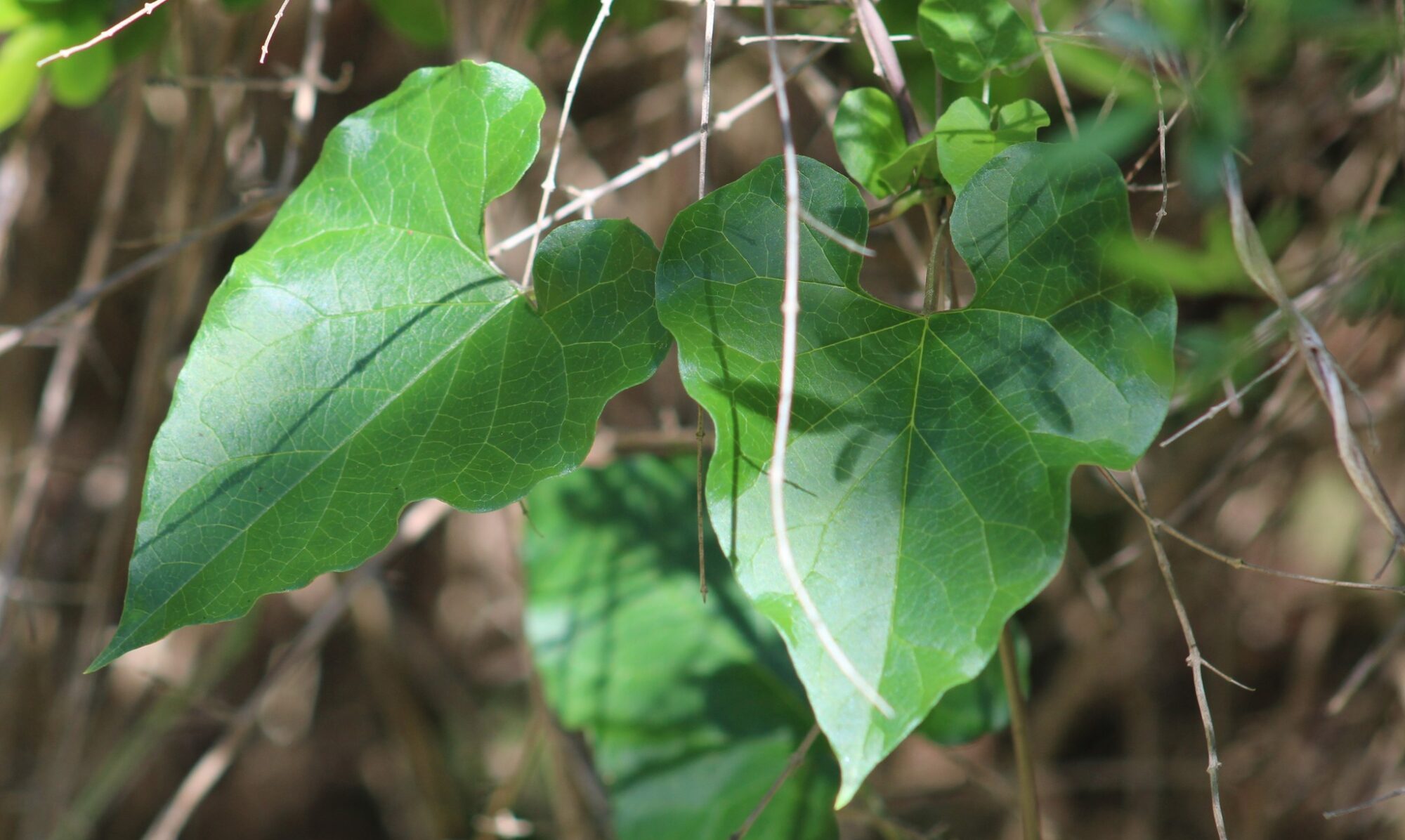
Charles also shared the following about this preserve: “There is little poison ivy (I have not seen any yet) to worry about.”   That’s welcome news!

Contact Charles (contact link at the top of this article) for more information about any of his projects.

** ARCHIVED POST – LINKS AND IMAGES MAY NOT WORK**
Online Chapter Meeting Sep 10: Mushrooms of the Gulf Coast States with David P. Lewis

** ARCHIVED POST – LINKS AND IMAGES MAY NOT WORK**

Join NPSOT-Wilco’s online chapter meeting on Thursday, September 10, 2020, at 7:00 pm, when guest speaker David P. Lewis will present Mushrooms of the Gulf Coast States:  A Field Guide to Texas, Louisiana, Mississippi, Alabama, and Florida.

You must register in advance to attend the meeting.  See the information later in this post for details.

image of person

David P. Lewis, M.S., is a retired chemist and avid mycologist with a BS and MS from Lamar University, Beaumont, TX, where his master’s thesis was based on a study of East Texas mushrooms. David is currently a Research Associate with the Field Museum of Natural History, Chicago, IL, where 5000 collections of his fungi are deposited.

He is an honorary staff member associated with the Tracy Herbarium at Texas A&M University.  From 2006 to 2018, he had been the Fungal TWIG (coordinator for mycologists) for the Big Thicket National Preserve All Taxa Biodiversity Inventory. He is president of the Gulf States Mycological Society (since 1998), has authored many papers related to mycology, and discovered several new species of mushrooms. (Four species are named for him.)  In 2009 he received The North American Mycological Association’s award for Contributions to Amateur Mycology, and in 2010, the R.E. Jackson Conservation Award from the Big Thicket Association.

With Alan and Arleen Bessette, David co-authored “Mushrooms of the Gulf Coast States- A Field Guide to Texas, Louisiana, Mississippi, Alabama and Florida”. He and his late wife Patricia live on 60 heavily wooded acres in Newton County, Texas where they study plants, fungi and wildlife.

image of person

How to attend

  • You must register in advance to attend the online meeting.
  • After registering, you’ll receive a confirmation email containing information about joining the webinar on the day of the meeting.

Please register for our Sep 2020 Monthly Meeting: Mushrooms of Texas, September 10, 2020 7:00 PM CDT at the following link:

removed


NPSOT-Williamson County meetings are free and open to the public. In this time of public health risk, our in-person meetings and field trips are canceled until further notice.

Check our blog announcements, calendar and Facebook for developing plans for virtual meetings and virtual field trips.

** ARCHIVED POST – LINKS AND IMAGES MAY NOT WORK**

Online Chapter Meeting August 13: “Native Plants Star in Monarch Waystations & BBMT” with Carol Clark

** ARCHIVED POST – LINKS AND IMAGES MAY NOT WORK**

Join NPSOT-Wilco’s online chapter meeting on Thursday, August 13, 2020, at 7:00 pm, when guest speaker Carol Clark will present “Native Plants Star in Monarch Waystations and the BBMT (Bring Back the Monarchs to Texas) Plays a Part.”  You must register in advance to attend the meeting.  Details are provided later in this post.

image of monarch butterfly

Carol’s presentation includes an explanation of NPSOT’s Bring Back the Monarchs to Texas committee and its garden grant program, and illuminates some of the highlights and pitfalls of past grant applications. We’ll also learn how Monarchs depend on native plants for their breeding and migration success, why planting for Monarchs is urgent, and the key features of a good Monarch waystation. Then, we’ll have a look at beautiful Texas natives you can plant to provide for Monarchs.

Carol Clark is an amateur botany enthusiast, a Texas Master Naturalist, longtime member of the Native Plant Society of Texas, and a Conservation Specialist with Monarch Watch. She’s currently chairing NPSOT’s Bring Back the Monarchs to Texas committee. She also co-administers the Texas Native Bee Co-op Facebook page. She and her husband own and operate Clark Haven Farm, a wildlife preserve and custom wildflower seed business in Cooke County. Carol grew up with a nature photographer father and wildlife artist brother, and has spent much of her life looking around in the great outdoors. Her favorite things to do are leading discovery walks in local natural areas, and finding and photographing interesting plants and insects.

How to attend

  • You must register in advance to attend the online meeting.
  • After registering, you’ll receive a confirmation email containing information about joining the webinar on the day of the meeting.

Please register for our Monthly Chapter Meeting: Native Plants Star in Monarch Waystations and the BBMT Plays a Part, August 13,  2020 7:00 PM CDT at the following link:

removed


NPSOT-Williamson County meetings are free and open to the public. In this time of public health risk, our in-person meetings and field trips are canceled until further notice.

Check our blog announcements, calendar and Facebook for developing plans for virtual meetings and virtual field trips.

** ARCHIVED POST – LINKS AND IMAGES MAY NOT WORK**