— by Anne Adams and Cindy Chrisler
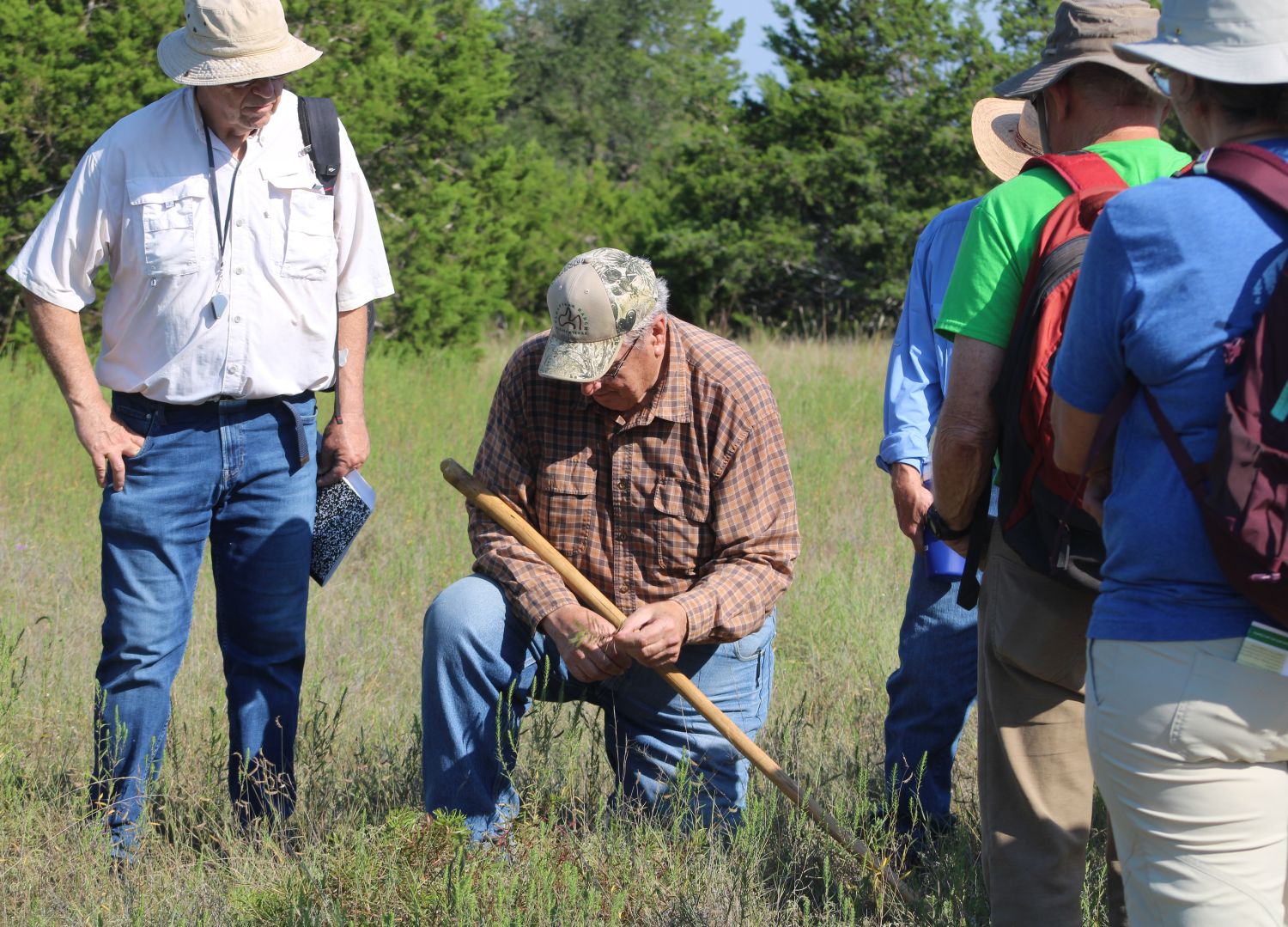
The field trip on September 12, 2025, to River Ranch County Park near Liberty Hill, was attended by 22 participants and led by Ricky Linex. This field trip was a follow-up to Ricky’s presentation at NPSOT Williamson County’s chapter meeting on September 11, where he presented “Guidelines for Learning to Identify Common Grasses of Central Texas.”
Calling on his decades of service with the NRCS, as well as information presented in his book, Range Plants of North Central Texas: A Land User’s Guide to their Identification, Value and Management, Ricky is a wealth of knowledge.
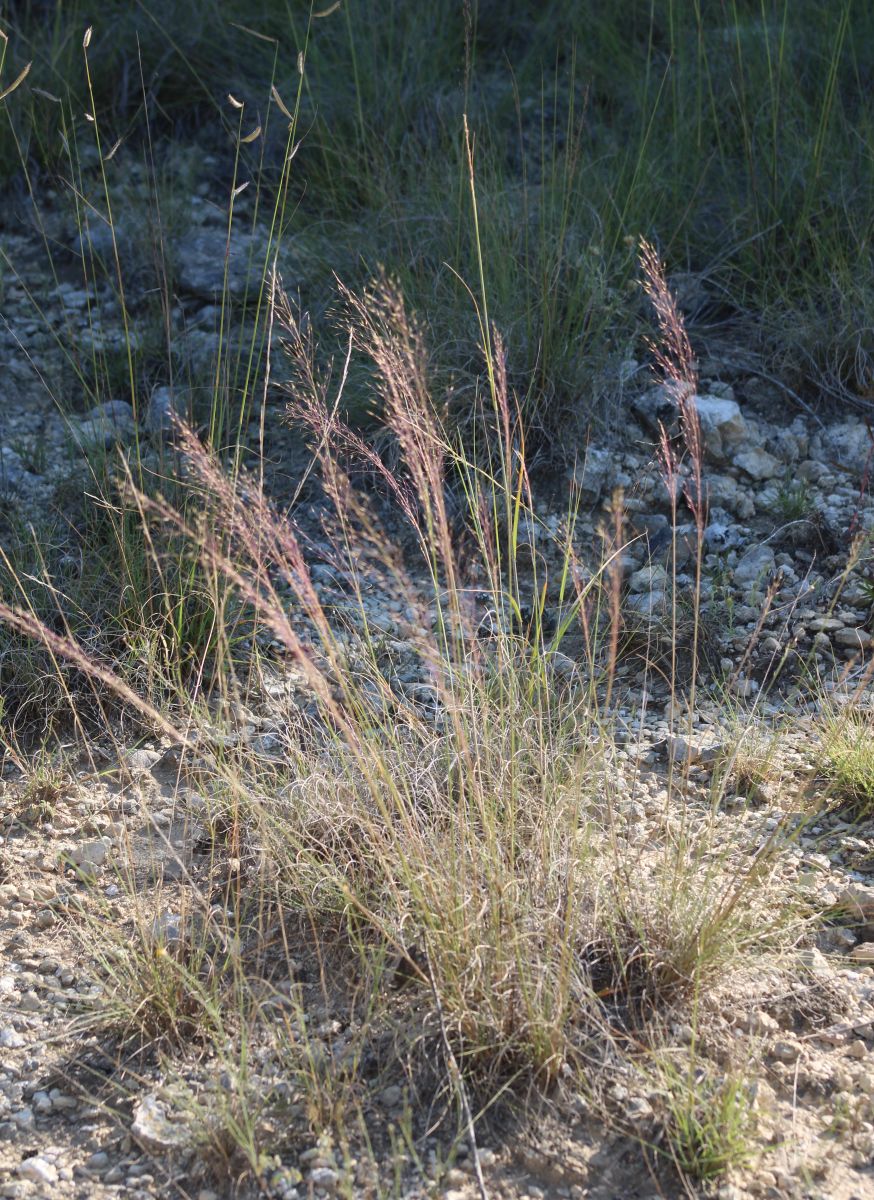
The hike covered about 1 mile through live oak-juniper savannah, where native grasses included tall grama, little bluestem, seep muhly, slim tridens, hairy grama, Texas grama, hairy tridens, and indiangrass, as well as rosettegrass, lovegrass, KR bluestem, and threeawns. Forbs included frogfruit, wooly vervain, pasture heliotrope, slender greenthread, broomweed, skeleton flower, doveweed, Drummond’s rain lilies, bullnettle, and noseburn.
Along the trail, Ricky demonstrated how touching or smelling plants can aid in identification. For example, to tell the difference between buffalograss and curly mesquite in the vegetative stage, he showed us how to rub a piece of stolon between the lips. If smooth, it is buffalograss, while stolons of curly mesquite are rough. At various stops, participants smelled crushed leaves of juniper, chewed leaves of prickly ash, or bravely rubbed leaves of noseburn on their skin. On finding bullnettle, Ricky explained how to safely collect its edible seeds. However, he cautioned that touching the leaves can be a very unpleasant experience.
At one point we stopped to study a motte of woody plants that included live oak, ashe juniper, hackberry, elbowbush, agarita, and white honeysuckle. From a wildlife perspective, Ricky explained that this dense vegetation would provide excellent cover for doves, quail, and other birds. For a land manager, such a motte could be duplicated in other areas by simply taking a shovelful of soil from under the canopy, which contains a diverse seed bank, and distributing it to other places on the property.
After the leisurely hike along the trails, the participants returned to the starting point and continued conversations with Ricky until the end of the allotted time. The field trip ended before the temperature became too uncomfortable.
River Ranch County Park includes 20 miles of hiking trails within its 1,354 acres. The trail chosen for this hike is one of the furthest from the park entrance, and less used than other trails, but was perfect for observing late summer grasses, which were still green thanks to recent rains. Although this hike covered a tiny portion of the park, the hike was a good introduction for those who had not previously visited River Ranch.
————–
See photos from this trip and others in our album =>